


Matter Management for South African Firms
Does every lawyer in your firm manage files differently? Improving your matter management is the most effective way to eliminate administrative chaos and ensure consistent service. When practitioners rely on idiosyncratic systems, the firm faces significant operational risk and potential professional indemnity issues. Transitioning to structured workflows allows leadership to maintain oversight while protecting the firm’s reputation from regulatory scrutiny. This article explores how standardising processes helps South African practitioners comply with LPC ethics and the Legal Practice Act. Discover how to move from individual working styles to firm-wide process excellence for a more predictable client experience. Learn to build a stronger, more sustainable practice through unified excellence.
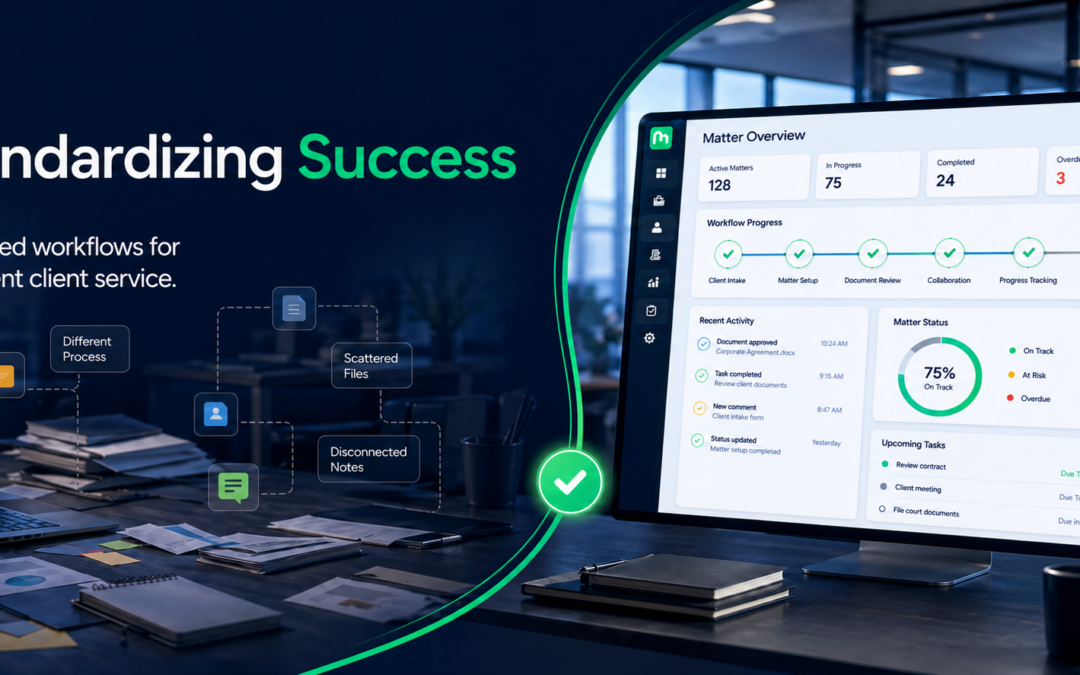
Standardised Success Through Matter Management
Effective matter management standardises firm-wide processes to ensure consistent compliance with the Legal Practice Act and LPC ethics. This structured approach eliminates idiosyncratic systems that often lead to missed prescription dates or trust account protocol failures. By implementing unified workflows, South African firms maintain oversight while reducing operational risk and professional indemnity exposure across every department.
Standardising Workflow to Reduce Operational Risk
Effective matter management is essential for navigating the complex landscape of the South African Legal Practice Act. Many firms struggle when practitioners rely on individual working styles instead of a unified standard. This inconsistency creates transparency issues and makes it difficult for leadership to maintain oversight of file progress. Without a structured approach, your firm faces an increased danger of missed prescription dates and regulatory scrutiny. A centralized system ensures every department follows the firm’s preferred way of working from start to finish.
The Legal Practice Council (LPC) enforces strict ethics regarding trust account protocols and FICA documentation. Manual, disparate workflows often lead to human error, which directly impacts your professional indemnity profile. High operational risk becomes a major financial liability, especially as clients demand fixed-fee arrangements and greater cost transparency. Transitioning to a digital framework helps practitioners avoid administrative chaos while protecting their reputation. This change allows firms to deliver a more predictable client experience and a higher standard of service.
- Consistent compliance with the Legal Practice Act
- Reduced likelihood of professional indemnity claims
- Better visibility for Department Heads and Practice Managers
- Higher efficiency for fixed-fee and transparent billing models
By implementing structured workflows, firms can eliminate the ‘black boxes’ created by idiosyncratic filing systems. This level of accountability is vital for long-term sustainability in a competitive legal market. Ready to standardise your practice? Book a Demo today to see how we help firms scale through process excellence.
Standardising Better Practice Oversight
Moving from individual working styles to firm-wide excellence requires a deliberate shift in operational strategy. South African law firms can mitigate risk and improve their professional indemnity profile by following these specific implementation steps.
- Audit current idiosyncratic systems to identify where manual processes increase the risk of missed prescription dates or regulatory errors.
- Define structured workflows that align with Legal Practice Act requirements for FICA documentation and trust account protocols.
- Implement a centralized matter management tool to replace disparate folders and provide leadership with real-time file visibility.
- Assign clear accountability markers within each workflow to ensure practitioners follow the firm’s preferred standard of service.
- Monitor bottleneck reports regularly to maintain oversight and address administrative chaos before it damages the client experience.
- Review fee-earning activities against fixed-fee arrangements to ensure long-term financial sustainability through operational risk reduction.
- Standardise success by training all staff on unified processes that satisfy Legal Practice Council ethics and documentation standards.
Transitioning to a unified model reduces the likelihood of manual errors in your practice. Leadership gains the visibility needed to identify bottlenecks early and ensure compliance across all departments. This structural shift moves the firm toward process excellence while protecting its professional reputation.
Are you ready to transform your practice via superior technology? Book a Demo with our expert team to explore modern legal solutions.
Essential Criteria for Matter Management Excellence
Selecting the right system involves more than just digitising files; it requires a deep understanding of South African regulatory demands. Effective matter management must solve the problem of administrative chaos while ensuring your firm remains compliant with the Legal Practice Act.
- Standardised workflows ensure every practitioner follows the same high-quality process, unlike manual systems that rely on individual preferences.
- Centralised oversight allows department heads to identify bottlenecks early and maintain accountability across various practice areas.
- Automated FICA and trust account protocols reduce operational risk by embedding South African legal compliance directly into your daily activities.
- Unified digital files eliminate the ‘black boxes’ of individual working styles, making file handover or management transitions seamless.
- Integrated prescription alerts provide a critical safeguard against professional indemnity claims, which often arise from missed court deadlines or dates.
- Scalable process excellence supports fixed-fee arrangements by ensuring fee-earning activities remain efficient and profitable over the long term.
- Enhanced transparency tools improve the client experience by providing clear updates, compared to the fragmented communication of traditional methods.
These features transform your practice from a collection of individuals into a unified, process-driven entity. Adopting these standards allows you to protect your firm’s reputation while delivering a more predictable service to your clients.
Standardising Matter Workflows: Misconceptions to Avoid
Many South African law firms incorrectly assume that software alone solves administrative chaos without a change in firm culture. Failing to address underlying process issues can lead to wasted technology investments and continued operational risk for legal practitioners.
- Avoid letting individual practitioners define their own filing systems, as this creates ‘black boxes’ that hinder firm-wide oversight.
- Don’t ignore the importance of FICA documentation and trust account protocols during matter management, or you risk LPC non-compliance.
- Specifically avoid manual diary entries for prescription dates, because missed deadlines significantly increase your professional indemnity profile risks.
- Never assume that senior lawyers are too experienced for structured workflows; inconsistency across departments damages the overall client experience.
- Don’t treat process excellence as a one-time project, as long-term sustainability requires continuous monitoring and accountability metrics.
- Avoid keeping administrative and legal data in separate silos to ensure that fee-earning activities remain optimized for fixed-fee arrangements.
By addressing these mistakes, leadership can move from individual working styles toward a unified, process-driven model for long-term growth. To see how these structured workflows function in practice, Book a Demo with our legal experts today.
Frequently Asked Questions for Legal Professionals
Q1: How can structured matter management reduce operational risk in a law firm?
A: Integrated matter management reduces risk by eliminating the ‘black boxes’ created by idiosyncratic working styles common in South African firms. These structured systems ensure that practitioners follow unified protocols for FICA documentation, trust account records, and prescription dates. Consistent oversight prevents manual errors that often lead to professional indemnity claims or regulatory scrutiny from the Legal Practice Council. By centralising all file information, leadership gains visibility into progress and can proactively address bottlenecks before they become liabilities.
Q2: Does the Legal Practice Act require standardised digital processes?
A: While the Legal Practice Act does not explicitly mandate specific software, it demands strict adherence to ethical and administrative standards. Modern practitioners use digital tools to ensure compliance with duty of care and rigorous financial record-keeping requirements. Standardising success via a central system makes it significantly easier to prove compliance during an LPC audit or investigation. This transition protects the firm’s reputation and ensures that every file meets a high, defensible standard of service.
Q3: What are the primary benefits of transitioning to a centralised matter management system?
A: A centralised system moves a firm from individual working styles to firm-wide process excellence and improved long-term sustainability. Practitioners benefit from a more organised department where accountability is built directly into the automated and structured workflows. This shift delivers a predictable client experience and ensures that fee-earning activities remain optimised rather than lost to administrative chaos. To see how these tools work in practice, firms can Book a Demo to explore the impact on their specific operations.
Q4: How does standardisation impact the client experience in South Africa?
A: Standardisation provides clients with a stronger standard of service and provides transparent communication through more predictable timelines and deliverables. In a legal landscape moving toward fixed-fee arrangements, efficiency becomes a critical factor for maintaining profitability and brand reputation. When every lawyer follows the same high-quality process, the firm builds trust by delivering consistent results across different departments. This professional uniformity is essential for scaling a practice while maintaining the high standards required by the South African public.
Q5: Can structured workflows help manage professional indemnity insurance costs?
A: Yes, structured workflows demonstrate to insurers that the firm has active measures in place to mitigate human error and negligence. By implementing firm-wide standards, you reduce the likelihood of missed deadlines or procedural failures that typically trigger indemnity claims. Many insurance providers view robust practice management as a sign of lower risk, which can lead to better terms. Promoting a culture of accountability through technology protects the firm’s financial health and its standing with the Legal Practitioners Provident Fund.
Q6: Why is moving away from manual file tracking critical for sustainability?
A: Moving away from manual tracking is critical because idiosyncratic systems are financial liabilities that hinder a firm’s ability to scale. Manual processes are often error-prone and make it difficult for managers to maintain oversight across multiple departments or growing teams. A unified model allows leadership to identify operational gaps and ensure that the firm’s preferred way of working is followed. Long-term sustainability in the South African market requires this shift toward process-driven excellence to meet rising client demands for transparency.
Answering Key Business Questions on Matter Management
Effective matter management reduces operational risk by ensuring compliance with the Legal Practice Act and LPC ethical guidelines. South African firms often struggle when individual practitioners rely on idiosyncratic systems rather than a unified firm-wide standard. Such disjointed workflows make tracking FICA documentation and trust account protocols difficult and increase the risk of missed prescription dates.
Modern practice management requires moving from manual ‘black box’ styles to centralized, structured matter workflows. This transition allows department heads to maintain oversight and identify bottlenecks before they affect the client experience. By implementing a tool like Matter Manager, firms create transparency that is vital for sustainable fixed-fee arrangements and scaling growth.
- Consistent FICA and POPIA compliance across all departments.
- Protection against professional indemnity claims through standardized tracking.
- Elimination of administrative chaos via structured legal workflows.
- Improved visibility for leadership to ensure high service standards.
Unified processes ensure that fee-earning activities remain optimized while protecting the firm’s reputation from regulatory scrutiny. If you are ready to standardize your internal processes, you should Book a Demo with our legal specialists.
Expert Recommendations for Sustainable Practice
Standardising your practice is no longer optional in the modern South African legal landscape. By implementing unified workflows, firms can effectively mitigate operational risk and ensure strict compliance with the Legal Practice Act. These structured processes eliminate administrative chaos, providing the visibility needed to identify bottlenecks before they impact your professional indemnity profile. Consistently high service levels protect your brand reputation while fostering long-term sustainability and efficiency.
Effective matter management allows your firm to transition from idiosyncratic working styles to firm-wide process excellence. Achieving this shift ensures your team delivers a predictable, transparent client experience that meets the high standards of the Legal Practice Council. Start your journey toward operational excellence by choosing a system built for practitioner oversight. To see how these tools transform legal workflows, Book a Demo with our expert team today.
