


Law Firm Management Software: Law firm practice management
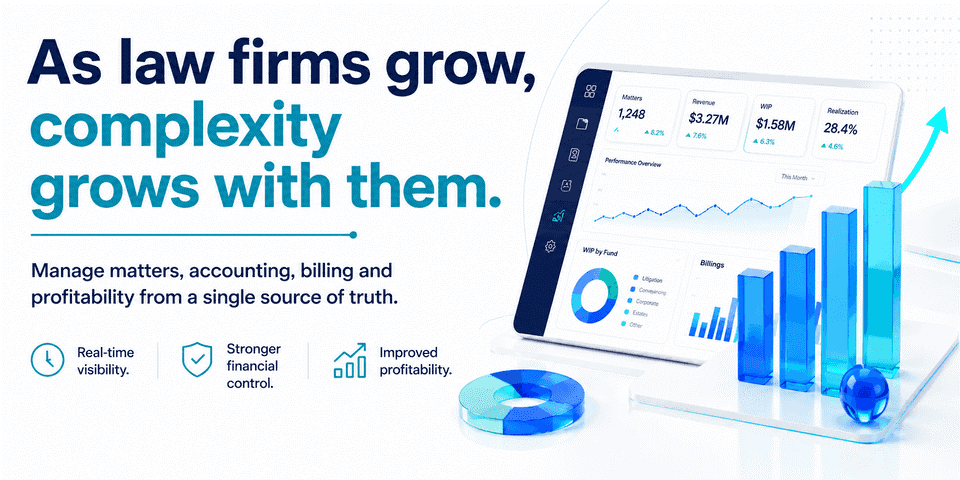
Law Firm Management Software matters in South African practice — here is what you need to know. Scaling a South African law firm often introduces dangerous operational friction and disconnected systems. Implementing reliable law firm practice management software is the most effective way to protect your LPC standing. Many practitioners struggle with manual trust accounting and fragmented workflows that obscure true matter profitability. This guide explores how transitioning to an integrated system eliminates these invisible leaks through real-time WIP visibility. You will discover how standardized billing workflows and automated compliance checks transform your firm into a data-driven business. Learn to manage your entire practice from a single source of truth while ensuring total regulatory transparency.
Law Firm Management Software: Key Considerations
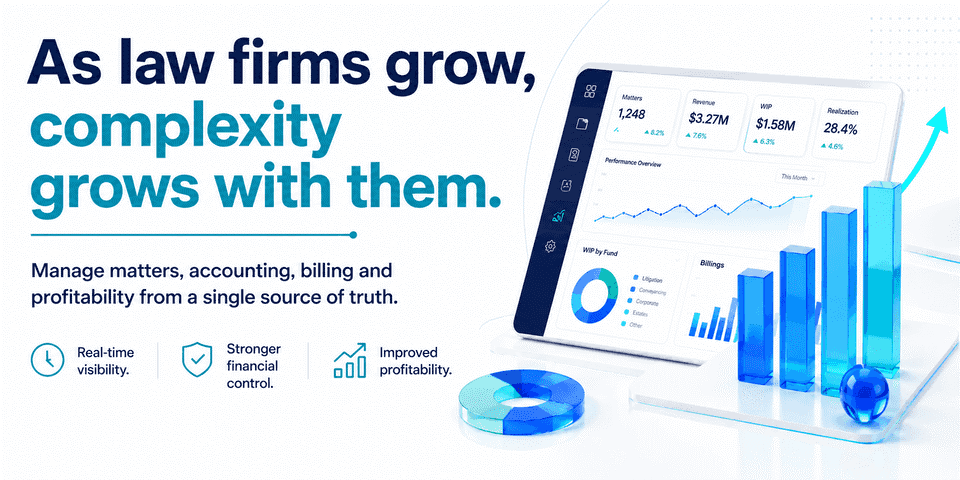
Law firm practice management software is an integrated digital platform designed to centralise legal workflows and financial accounting. These systems provide South African practitioners with essential tools for matter management and LPC-compliant trust accounting. Most modern solutions utilize a cloud-based SaaS model to ensure secure, remote access for firms of all sizes. By consolidating data into a single source of truth, these systems eliminate the operational risks of manual spreadsheets.
Solving Operational Fragility
South African law firm practice management software is no longer a luxury for modern boutiques or large corporate firms. Many practitioners still rely on manual spreadsheets to manage their complex legal workflow management needs. However, this often leads to dangerous reconciliation lags and severe risks to your standing under the Legal Practice Act. Growth creates complexity that buckles disconnected legacy systems, resulting in invisible leaks and uncaptured billable hours. Practitioners must bridge the gap between matter management and financial control to safeguard their LPC status effectively.
The most critical friction point or ‘blind spot’ involves trust accounting being decoupled from daily matter management. Relying on manual trust transfers and business-to-trust offsets is unsustainable for any firm attempting to scale its legal practice operations. Fragmented data silos make it difficult to maintain the total transparency required by South African regulatory bodies. You need a single source of truth to ensure every action is accounted for in real-time. This level of operational discipline transforms compliance from a burdensome chore into a competitive advantage for the business.
Transitioning to an integrated system allows leadership to move from reactive firefighting to proactive, data-driven matter and partner management. You can eliminate the ‘invisible leaks’ of uncaptured disbursements through standardized billing workflows and precise WIP visibility. This shift provides the client relationship intelligence necessary to navigate the increasingly stringent South African legal landscape today. By using a unified platform, you prepare your firm for evolving FICA and LPC ethics requirements over the next three years.
Essential Capabilities for Modern Legal Operations
Selecting the right legal technology requires a clear focus on local regulatory demands and internal operational efficiency. Unlike generic global solutions, South African law firm practice management software must align strictly with Legal Practice Act requirements.
- LPC-Compliant Trust Accounting: Integrated trust accounting ensures that client funds are tied directly to specific matters for seamless auditing. This avoids the reconciliation lag typically found in fragmented spreadsheet-based systems.
- Real-Time WIP Visibility: Practitioners gain immediate insight into uncaptured billable hours and disbursements. This prevents ‘invisible leaks’ where work is performed but never successfully invoiced to the client.
- POPIA-Grade Data Security: High-level encryption and local data residency options protect sensitive client information. This ensures compliance with South African privacy laws compared to legacy servers with limited protection.
- Standardised Billing Workflows: Automation replaces manual month-end processes to ensure every action is accounted for accurately. Leadership can shift their focus from reactive firefighting to proactive financial management.
- FICA and Matter Inception Checks: Integrated compliance checks are baked into the inception process. This turns regulatory requirements into a streamlined, automated part of your daily professional workflow.
- Profitability Reporting: Single-source reporting provides clear data on partner, client, and matter performance. Firms can identify high-performing practice areas through detailed data-driven insights instead of guesswork.
Managing growth without integrated systems creates dangerous administrative silos that risk your firm’s professional standing. Modern platforms provide the total transparency needed to transform compliance into a sustainable and profitable business model.
Critical Pitfalls to Avoid During Implementation
Adopting law firm practice management software requires strategic planning to avoid costly operational disruptions. Many firms fail because they treat software as a magic wand rather than a structured business process. You must sidestep these common errors to ensure your transition improves productivity instead of creating new friction points.
- Avoid neglecting change management by failing to appoint an executive sponsor to drive firm-wide adoption and accountability.
- Don’t skip comprehensive user training sessions as poorly prepared staff will likely revert to inefficient manual spreadsheets.
- Never ignore POPIA regulations by choosing a vendor that fails to guarantee South African data residency and security.
- Avoid weak data migration plans which often result in inaccurate matter histories and corrupted financial reconciliation records.
- Don’t overlook trust accounting configuration because incorrect setup can lead to severe LPC audit findings and compliance risks.
- Never underestimate the need for role-based permissions which protect sensitive client intelligence and firm profitability data.
- Avoid selecting platforms without clear success metrics to measure your actual return on investment and workflow efficiency.
Practitioners should prioritize local compliance and user buy-in to unlock the full potential of their investment. Failing to address these foundational elements often leads to vendor lock-in with a system that staff actively resist. Focus on aligning your technology with the Legal Practice Act to ensure a secure and profitable digital transformation.

Critical Business Questions for South African Firms
Managing a growing firm requires moving beyond manual spreadsheets to maintain Legal Practice Act compliance. Decoupling trust accounting from matter management creates reconciliation lag, which puts your LPC standing at significant risk. Modern law firm practice management software eliminates these friction points by tying financial data directly to specific matters. This integration prevents the audit findings commonly associated with manual business-to-trust offsets and complex staff scaling. Integrated systems ensure that operational growth never compromises your regulatory discipline or your license to practice.
Many practitioners suffer from invisible leaks caused by uncaptured billable time and unrecovered disbursements. Transitioning to Practice Manager Pro provides real-time WIP visibility and standardized billing workflows for your entire team. This shift allows leadership to move from month-end firefighting to proactive analysis of partner and client profitability. By establishing a single source of truth, you can identify high-performing practice areas with total financial control. Integrated firms essentially turn compliance into a streamlined, automated part of a sustainable and profitable business model.
To see these integrated tools in action, you can Book a Demo to explore our specialized South African features.
Strategic adoption of Law Firm Practice Management Software
Consolidating your operations into a single source of truth is the most dependable way to secure your firm’s future. Modern law firm practice management software prevents the financial leakage caused by manual spreadsheets and disconnected matter management systems. By integrating LPC-compliant trust accounting with real-time WIP visibility, firms can proactively manage partner and client profitability. This technological shift ensures that regulatory compliance under the Legal Practice Act becomes an automated asset rather than an administrative burden.
We recommend starting with a pilot scope focused on your most complex practice area to track immediate efficiency gains. Setting clear success metrics for billable hour capture will validate your phased rollout and justify the digital transition. Take the first step toward operational excellence and protect your practice from the risks of fragmented legacy systems. To see how integrated intelligence transforms profitability, please [Book a Demo](https://legalinteract.com/law-firms/) today.
