


Accounting software for South African law firm growth
Many local law firms worry that moving to specialized accounting software will disrupt their daily operations or require complex IT support. You might feel trapped by manual capturing, tedious spreadsheet errors, and growing compliance pressure from the LPC. Relying on outdated systems often leads to time-consuming reconciliations that compromise your firm’s financial integrity. This guide explores how practical legal tools simplify trust accounting and repetitive admin tasks. You will discover how to gain better visibility into your finances while ensuring your records remain audit-ready. Modernizing your practice should not make you work harder. Start building a more controlled, professional workflow that supports your firm’s success today.
The Strategic Value of Specialized Accounting Software
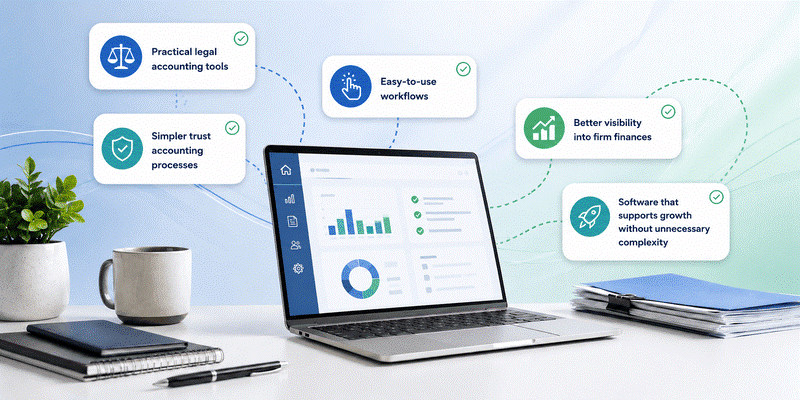
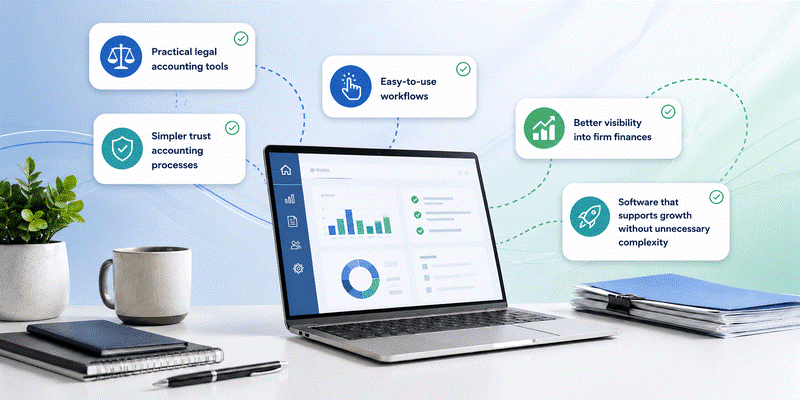
Specialized accounting software enables law firm growth by automating trust account reconciliations and ensuring strict LPC compliance. These digital tools replace manual capturing and spreadsheets with easy-to-use workflows that reduce daily administrative errors. South African firms must adopt practical legal accounting tools to manage growing oversight from the FIC and the Legal Practice Council. Modern software provides the financial visibility needed to scale professional operations without adding unnecessary organizational complexity.
Why Many Firms Hesitate to Adopt Professional Financial Tools
Many local practitioners view spreadsheets as safe because they feel familiar and manageable for daily tasks. However, practitioners often overlook the significant risks involved when they avoid transitioning to dedicated accounting software. Relying on manual capturing leads to spreadsheet errors and time-consuming reconciliations that compromise trust account integrity. Under the Legal Practice Act 28 of 2014, there is zero margin for error regarding trust funds. Practitioners face growing compliance pressure from the LPC and the Financial Intelligence Centre regarding mandatory FICA compliance. Manual systems simply cannot provide the real-time visibility needed to ensure every single cent is properly accounted for.
There is a persistent myth that you need a large IT team to modernize your legal practice. Practical legal accounting tools are often dismissed due to fears about losing important data or disrupting operations. Yet, the daily disruptions caused by manual capturing and repetitive admin tasks are actually far more frustrating. Moving to digital systems ensures that compliance is built into the firm’s daily operations rather than being an afterthought. Uncomplicated technology is no longer a luxury but a mandatory survival tool for small to mid-sized South African law firms. These easy-to-use workflows help you focus on legal work while the system handles rigid regulatory requirements.
Software should not make a firm work harder or create unnecessary technical hurdles for your support staff. Instead, it should offer better visibility into firm finances and support growth through more controlled, professional workflows. You can start building a more secure future by exploring simpler trust accounting processes that mitigate risk. If you would like to see how Winlaw works in practice, our team would be happy to show you. You can Book a Demo to see how we simplify South African legal compliance.
Modernising your practice with accounting software
Moving from manual spreadsheets to automated systems requires a clear strategy to maintain operational continuity. Practitioners must ensure that their transition preserves the integrity of trust funds while reducing the daily burden of admin tasks.
- Audit existing manual spreadsheets to identify recurring errors and data gaps before migrating your firm’s records.
- Select a legal accounting software that offers simpler trust accounting processes specifically designed for South African compliance requirements.
- Map your current workflows to identify which repetitive admin tasks you can automate for better visibility.
- Implement practical legal accounting tools that integrate FICA verification to meet the growing oversight from the FIC.
- Schedule a staff training session to ensure your team understands the new easy-to-use workflows without disrupting daily operations.
- Perform a trial reconciliation to verify that your digital records match your bank statements with zero margin for error.
- Consult with a software provider to ensure your cloud security meets the stringent data protection standards of POPIA.
- Book a Demo to see how Winlaw helps South African law firms achieve growth through better financial control.
The Legal Practice Act demands high standards of accuracy for every trust account transaction. Therefore, adopting uncomplicated technology is now essential for survival. Modern systems allow you to focus on legal work while maintaining audit-ready records. Smaller firms can finally compete by using software that supports growth without requiring an internal IT team.
Navigating the Legal Practice Act Compliance Standards
South African law firms must operate under the strict governance of the Legal Practice Act 28 of 2014. The Legal Practice Council (LPC) demands that practitioners maintain precise records to distinguish between business and trust funds clearly. Relying on manual spreadsheets creates significant risk under these regulations compared to automated systems that enforce strict ledger separation. Your firm must be audit-ready at all times to avoid losing your Fidelity Fund Certificate during annual inspections. These legal obligations turn modern digital tools into essential survival equipment for practitioners facing growing regulatory pressure today.
- Automated trust account ledgers ensure every cent is accounted for according to Section 86 of the Legal Practice Act.
- Integrated FICA verification allows firms to meet Financial Intelligence Centre requirements more reliably than traditional manual document storage.
- Precision reporting in accounting software eliminates common spreadsheet errors that often lead to qualified audits or expensive LPC fines.
- Real-time visibility into firm finances allows senior partners to spot potential shortages before they become serious compliance breaches.
- Efficient bank reconciliation tools reduce the administrative burden while maintaining the total integrity of your firm’s financial history.
- Role-based access controls prevent unauthorised staff from tampering with sensitive trust transactions or altering historical ledger entries.
- Digital audit trails provide a clear chronological history of all updates to support growth and ensure transparent financial accountability.
Modernizing these workflows reduces daily frustrations and protects your reputation within the South African legal community. You can discover more about these easy-to-use workflows and how they protect your practice. Additionally, if you want to experience these tools personally, you can [Book a Demo](https://legalinteract.com/law-firms/) to see how streamlined trust accounting operates.
The Risks of Delaying Modernized Accounting Software
Relying on manual processes creates invisible risks that often compromise the financial integrity of a South African legal practice. Practitioners frequently fear digital transitions while ignoring the dangers inherent in their current spreadsheet-based systems and manual workflows.
- Avoid using generic spreadsheets for trust accounts, as manual errors often lead to serious Legal Practice Act violations.
- Don’t ignore repetitive admin tasks that drain your billable hours and prevent your firm from focusing on growth.
- Never skip real-time reconciliations, because delayed financial matching makes it difficult to detect fraud or bank statement discrepancies.
- Avoid thinking that internal IT teams are necessary, as modern accounting software is designed for simple, independent firms.
- Don’t neglect FICA and LPC compliance tracking, because manual systems fail to provide the audit-ready transparency regulators require.
- Never assume manual capturing is ‘safer’ than automation, as human error remains the leading cause of accounting imbalances.
Failing to adopt specialized accounting software often leads to increased compliance pressure from the LPC and FIC. These daily frustrations become mandatory survival challenges that simple spreadsheets cannot solve for the modern practitioner. To see how these tools operate in reality, you can Book a Demo to explore better visibility today.
Dispelling Myths About Legal Finance Tools
Q1: Does migrating to a new accounting software always disrupt daily law firm operations?
A: Modern accounting software minimizes disruption through structured data migration and intuitive interfaces designed specifically for legal practitioners. While many firms fear losing data or interrupting casework, manual systems actually cause more daily friction than digital transitions. Purpose-built tools like Winlaw use easy-to-use workflows to keep your practice running smoothly while you upgrade your financial systems.
Q2: Is a specialized IT team required to manage legal accounting tools?
A: You do not need a large technical team to implement or maintain effective legal accounting software today. These systems simplify internal workflows by automating repetitive admin tasks that previously required manual oversight and deep technical knowledge. Practitioners can focus on legal work while the software manages rigid Legal Practice Act requirements and LPC ethics automatically.
Q3: Are manual spreadsheets safer for South African law firms than cloud-based systems?
A: Manual spreadsheets are significantly riskier because they lack the real-time visibility and audit trails required for strict trust compliance. Under the Legal Practice Act, there is zero margin for error regarding the handling of client trust funds. Dedicated legal tools remove the risk of human error and ensure every cent is accounted for in an audit-ready format.
Q4: Why should a small firm invest in accounting software instead of continuing manual capturing?
A: Investing in accounting software is essential for survival as the LPC and Financial Intelligence Centre increase their regulatory oversight. Manual capturing leads to time-consuming reconciliations and spreadsheet errors that compromise the financial integrity of your professional law practice. Modern software supports growth without unnecessary complexity, allowing small firms to maintain perfect records and professional standards easily.
Q5: How does legal software help with South African trust accounting compliance?
A: Legal software simplifies trust accounting by enforcing strict rules that prevent the commingling of business and trust funds. These tools provide better visibility into firm finances and automate the generation of reports needed for your annual audit. By using simpler trust accounting processes, your firm can meet its legal obligations with less admin and greater peace of mind.
Q6: Will staff struggle to learn a new digital legal system?
A: Most staff find that practical legal accounting tools are easier to navigate than complex, fragmented manual filing systems. Modern legal software focuses on simplicity and logical workflows that mirror the way South African attorneys naturally manage their files. If you want to see these workflows in action, you can Book a Demo to explore the user-friendly interface.
Answering local practitioner concerns
Many South African legal practitioners view manual spreadsheets as safe because they are familiar. However, these systems often lead to spreadsheet errors that compromise the integrity of a firm’s trust account. Under the Legal Practice Act, firms have zero margin for error regarding trust funds. Manual capturing cannot provide the real-time visibility needed to ensure every cent is accounted for effectively. By moving to a dedicated accounting software, firms mitigate the risk of repetitive admin errors and ensure audit-ready financial records.
A persistent myth suggests you need a large IT team to modernize your legal practice. Practical legal accounting tools are designed specifically for the way South African firms actually work. These systems simplify workflows by automating repetitive administration tasks and streamlining trust accounting processes. Instead of adding complexity, the right tool handles rigid LPC requirements behind the scenes. This allows practitioners to focus on their legal work while maintaining professional standards and better visibility into firm finances.
Increasing oversight from the LPC and FIC regarding FICA compliance makes uncomplicated technology a mandatory survival tool. Small firms face unprecedented pressure to maintain perfect records that manual systems simply cannot sustain. Modernizing your firm ensures that compliance is built into daily operations for greater peace of mind. To see how these tools support growth, [Book a Demo](https://legalinteract.com/law-firms/) to explore our easy-to-use workflows today.
Choose a Sustainable Way Forward
Transitioning to specialized legal accounting software ensures your firm meets strict LPC and FIC compliance standards with ease. You can effectively eliminate manual capturing errors and streamline your trust accounting through purpose-built, automated workflows. This shift provides better visibility into firm finances while reducing the daily administrative burden on your legal team.
Modern technology should not complicate your practice; it should provide security and professional control for future growth. Secure your firm’s financial integrity today by adopting a system designed specifically for the unique South African legal landscape. To see these practical tools in action, you can Book a Demo to explore how our solutions simplify your legal operations.
