


Document Management for South African Legal Practices
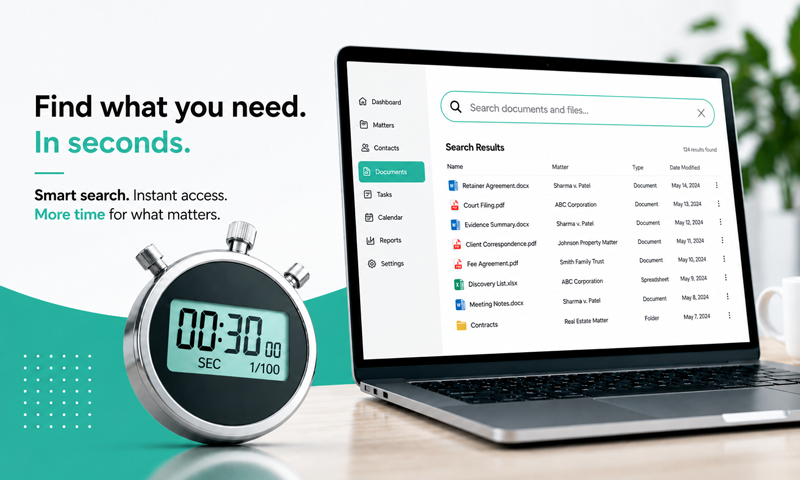
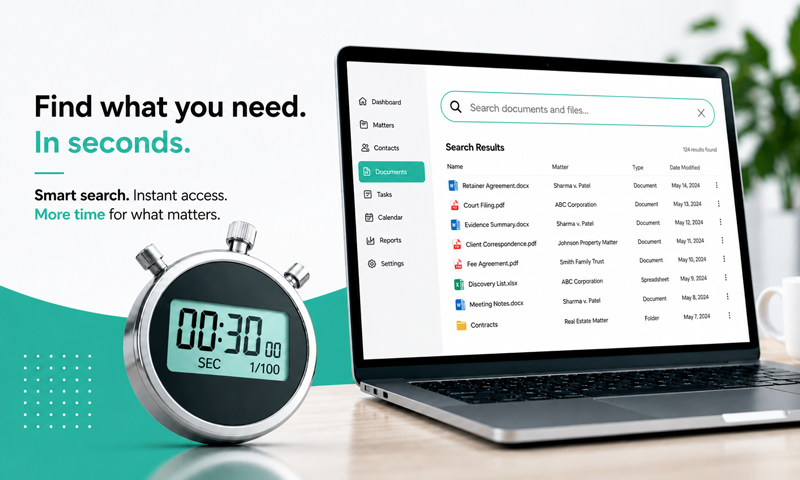
How much time do you lose every day searching for emails, documents, or handwritten notes? Effective document management is now a regulatory necessity under the Legal Practice Act for every South African firm. In a busy practice, critical information gets buried fast and every minute spent searching is time you cannot bill. Our structured system puts everything in one place, providing instant access to what you need exactly when you need it. You can finally stop digging through fragmented inboxes and start focusing on high-value legal strategy. This guide explores how localized matter-centric workflows reduce administrative frustration while ensuring full legal compliance for your growing firm.
Why Modern Document Management Matters
Effective document management involves centralising all matter-related files, emails, and notes into a single, searchable digital repository. This system ensures legal compliance with the Legal Practice Act by maintaining an audit-ready trail for every client matter. By adopting a matter-centric approach, your firm gains instant access to critical data while significantly increasing billable time. This transition reduces administrative frustration and helps practitioners manage professional indemnity risks more effectively across South Africa.
The Practical Impact of Efficient File Organization
Effective document management is now a regulatory necessity under the Legal Practice Act for every South African firm. Many practitioners find that information gets buried fast, leading to hours lost digging through fragmented inboxes. This inefficiency directly erodes your billable time and increases the risk of missing vital client instructions or deadlines. Without a structured system, maintaining an audit-ready file becomes an overwhelming burden that detracts from core legal work.
The Legal Practice Council (LPC) emphasizes professional indemnity and duty of care in modern practice. If you cannot find a document, you cannot defend your professional actions during a dispute or audit. Improved organization across the firm leads to more billable time and significantly less admin frustration for your team. Moving away from a paper-heavy environment to a fast, matter-centric system ensures that you can focus on high-value strategy.
Centralized systems mitigate long-term risk by providing instant access to all correspondence, files, and notes in one place. This searchability reduces the mental load on staff, which is essential for a sustainable and healthy legal practice. You can easily [Book a Demo](https://legalinteract.com/law-firms/) to see how streamlined workflows help maintain full legal compliance.
Steps for Efficient Legal Document Management
Adopting a structured digital workflow ensures your firm remains compliant with the Legal Practice Act. Use the following steps to reclaim your billable time and streamline daily operations.
- Audit your current document management systems to identify where information gets buried during your daily workflow.
- Centralise all matter-related correspondence into a single platform to provide instant access for your entire legal team.
- Implement matter-centric naming conventions across all digital folders to ensure legal compliance with LPC record-keeping standards.
- Migrate fragmented email threads and handwritten notes into a secure, searchable digital matter file immediately.
- Automate your administrative tasks to reduce the manual effort required for reconciling complex legal files regularly.
- Review your professional indemnity risks by ensuring every matter has a complete and searchable audit trail.
- Train your staff on modern digital tools to ensure improved organization and less admin across the whole practice.
- Schedule a specialized consultation to discover how a unified system can help your firm stop searching and start practicing.
Effective systems turn administrative burdens into competitive advantages. Ready to transform your workflow? You can “Book a Demo” (https://legalinteract.com/law-firms/) to see these benefits in action today.
Essential Features for Legal Document Management
Selecting the right tools is critical to ensure your firm meets the rigorous standards set by the Legal Practice Council. Modern systems must solve specific South African challenges like regulatory compliance and administrative bottle-necks. These key takeaways highlight the modern functions needed to reclaim your billable time while reducing professional indemnity risks.
- Centralised Matter Control: Unlike fragmented folders, a unified system links every email and note directly to a specific matter file.
- Regulatory Compliance Support: Professional document management ensures an audit-ready trail that satisfies the record-keeping requirements of the Legal Practice Act.
- Accelerated File Retrieval: Instant access to correspondence removes the common time-sink of digging through fragmented inboxes or local drives.
- Increased Billable Capacity: Modern automation allows you to spend less admin time on filing and more hours on high-value strategy.
- Enhanced Practitioner Wellness: Improved organisation across the firm reduces the mental load and burnout associated with manual data reconciliation.
- Advanced Search Functionality: Factual search tools provide a complete history of client instructions which helps practitioners defend their actions effectively.
- Collaborative Data Synergy: Centralised platforms ensure that no information remains siloed within individual departments or among specific staff members.
By prioritising these features, your firm can transition from a paper-heavy environment to a fast, structured digital workflow. You can effectively mitigate risk while delivering superior service to your clients through better information control.
Watch Out For These Risk Factors
Poor document management often leads to regulatory scrutiny and significant financial losses for South African legal practitioners. Avoiding these common pitfalls ensures your firm remains compliant with the Legal Practice Act and LPC guidelines. When you fail to organize your digital files, you increase the risk of missing critical court deadlines. You must also guard against data silos that prevent collaborative work and compromise your duty of care to clients. Practitioners who ignore these red flags often face higher insurance premiums and unnecessary administrative stress.
- Avoid using generic folders on local drives as this creates fragmented data that is difficult to audit later.
- Don’t rely on personal email inboxes for matter-related correspondence because other team members cannot access vital case instructions.
- Never ignore the ‘searchability’ of your data as this directly impacts your ability to defend professional indemnity claims.
- Avoid manual reconciliation of handwritten notes which consumes your billable time and introduces the potential for human error.
- Don’t store sensitive client information in unsecured cloud drives that fail to meet stringent POPIA compliance requirements.
- Never skip matter-centric filing because disorganized records lead to practitioner burnout and high administrative frustration during busy periods.
By addressing these mistakes, you can reclaim your day and focus on high-value legal strategy instead of retrieval tasks. To see how a structured system can transform your workflow, you should consider a professional transition. You can [Book a Demo](https://legalinteract.com/law-firms/) to explore tools that provide instant access to your entire matter history.
Related Questions
Q1: Why is document management critical for South African law firms under the Legal Practice Act?
A: Efficient document management is a regulatory necessity because it ensures your firm maintains an audit-ready file for every matter. The Legal Practice Act requires stringent record-keeping to protect client interests and maintain professional standards. Without a structured system, manual reconciliation of emails and notes becomes a major time-sink that leads to administrative gaps. Failing to track vital instructions or court deadlines can lead to professional indemnity claims or severe penalties from the LPC.
Q2: How can a matter-centric system increase billable time in a busy law practice?
A: A matter-centric system increases billable time by eliminating hours wasted on manual information retrieval and fragmented administrative tasks. Legal practitioners often find that critical information gets buried fast within unorganized digital folders or physical file stacks. By organizing all correspondence and notes centrally, you enjoy instant access to the data you need for your legal work. You can transition away from tedious admin and focus your energy on high-value legal strategy that generates higher revenue.
Q3: What are the risks of using fragmented digital folders for legal files?
A: Fragmented folders create significant risks because documents stored across local drives and personal inboxes prevent a complete audit trail. If you cannot find a specific document quickly, you cannot defend your professional actions during a negligence claim. Information silos within a team lead to misalignment and the high probability of overlooking critical court deadlines or client instructions. Moving to a centralized system ensures long-term risk management and protects the firm’s reputation within the South African market.
Q4: Does modern document management software help with POPIA compliance?
A: Yes, modern software helps with POPIA compliance by providing secure, centralized storage that limits unauthorized access to sensitive client data. South African firms must ensure that personal information is protected throughout the entire lifecycle of a legal matter. Structured digital systems allow for better data governance, secure sharing protocols, and the ability to delete information once retention periods expire. You can Book a Demo to see how automated workflows simplify your firm’s adherence to South African privacy laws.
Q5: How does improved organization impact the mental wellness of legal practitioners?
A: Improved organization reduces the massive mental load and stress associated with digging through inboxes while facing urgent court deadlines. When everything is stored in one place, practitioners experience less administrative frustration and a significant reduction in chronic burnout. A fast, structured environment allows you to stop searching and start practicing with greater confidence and much better focus. Lowering the daily anxiety of misplaced files is essential for maintaining a sustainable and healthy long-term career in law.
Q6: Can a digital shift reduce the administrative burden of physical paper storage?
A: Transitioning to a digital approach fundamentally reduces the need for expensive physical archives and the labor-intensive filing of paper. Many firms struggle with traditional paper-heavy environments where it is nearly impossible to search for specific historical matter details quickly. Digital systems provide less admin by automating the filing process and making every note or email searchable from any location. This shift allows your firm to reclaim office space while ensuring that the entire team remains aligned on tasks.
Answering Core Business Questions on Document Management
Manual reconciliation of emails and handwritten notes remains a top time-sink for South African attorneys today. Every minute spent searching for specific correspondence is time you simply cannot bill to a client. South African practitioners often find that vital data gets buried fast within fragmented inboxes or shared drives. This lack of structure creates risks where critical instructions might be overlooked during a busy work day. Implementing modern document management ensures that every file remains audit-ready and compliant with the Legal Practice Act.
A centralized matter-centric system fundamentally changes your workflow by providing instant access to all relevant files. Moving away from paper-heavy environments allows legal teams to focus on high-value strategy rather than manual retrieval. Improved organization across the firm leads to more billable time and significantly less admin frustration for everyone. Practice Manager Pro organizes all correspondence and notes by matter to keep your entire team perfectly aligned. You can [Book a Demo](https://legalinteract.com/law-firms/) to see how streamlined workflows can transform your practice.
The LPC now treats organized record-keeping as a regulatory necessity for professional indemnity and duty of care. Being able to find a document quickly is critical if you must defend your professional actions later. Searchable data mitigates risk by ensuring a complete audit trail exists for every single legal matter handled. This efficiency reduces the mental load and stress associated with digging through inboxes under tight court deadlines. Ultimately, better digital organization supports long-term practitioner wellness and creates a more sustainable South African practice.
Implementing Effective Matter-Centric Systems
Transitioning to a matter-centric system ensures your firm meets the stringent record-keeping standards of the Legal Practice Act. Better document management leads to less admin and significantly more billable time for your busy legal professionals. Centralizing your files creates a searchable audit trail that protects the firm and reduces practitioner burnout across the team. By moving away from fragmented drives, you provide instant access to vital information for every team member.
Stop searching for lost notes and start practicing with a tool designed specifically for the South African legal market. Improve your operational efficiency and ensure full legal compliance by securing your firm’s data in one structured platform today. Take the first step toward a more organized practice and Book a Demo to see our software in action.
